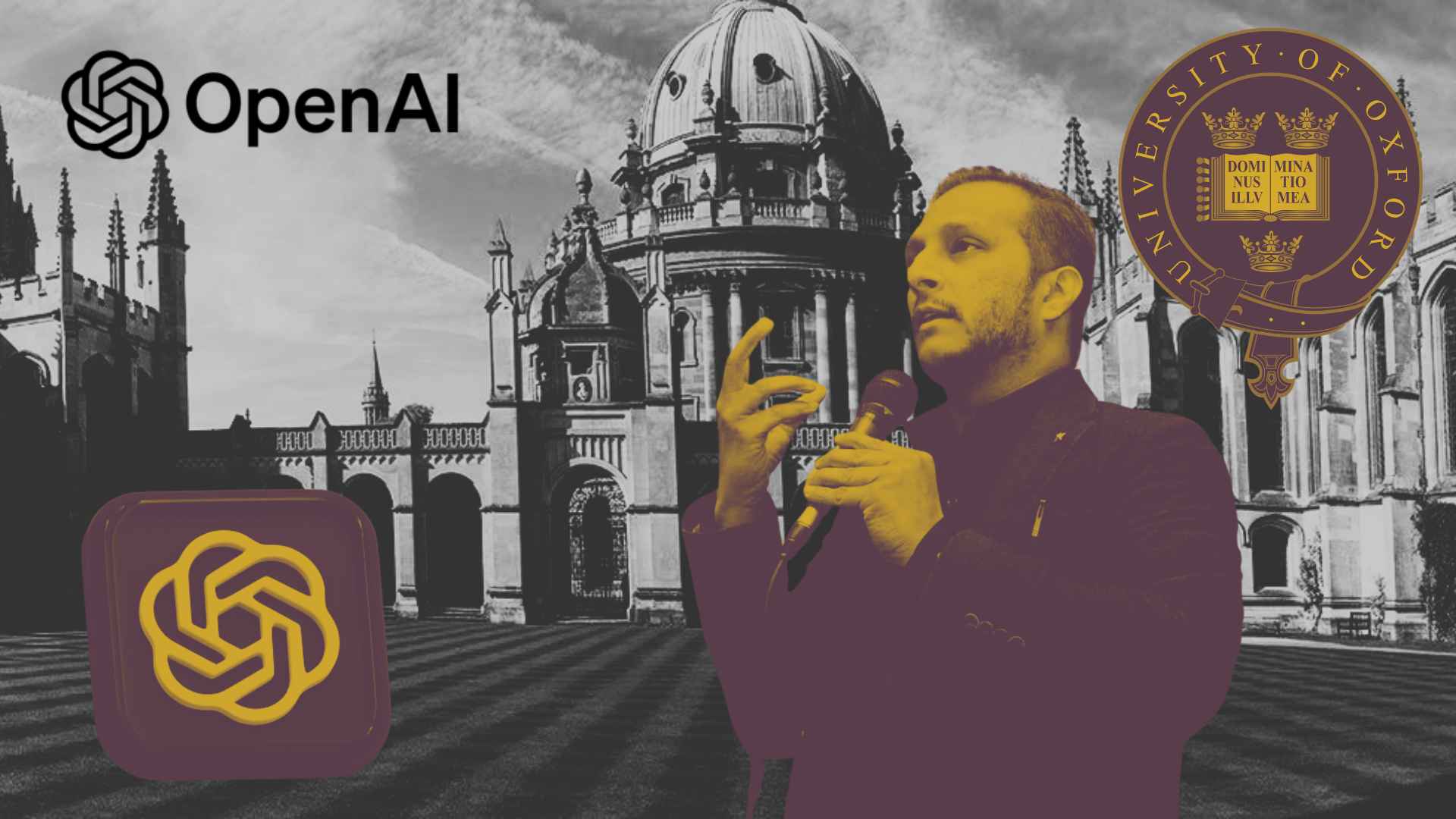
At a time when many questioned the role of artificial intelligence (AI) in education, the world’s leading universities—Oxford, Harvard, Ohio State, and Howard—are now actively integrating OpenAI’s tools into their academic and research ecosystems. With OpenAI investing $50 million to provide free access to AI technology, research funding, and computational resources, the landscape of higher education is undergoing a historic transformation.
Bringing AI to Academia
This initiative aims to democratize AI, ensuring that students, researchers, and faculty have access to state-of-the-art AI technology. By incorporating AI into education and research, universities can push the boundaries of discovery in fields such as medicine, history, engineering, and agriculture.
Reviving Lost Knowledge at the University of Oxford
Richard Ovenden, Bodleian Librarian at the University of Oxford, highlights how OpenAI’s collaboration is reshaping historical research. The Bodleian Library, which houses centuries-old collections, contains countless manuscripts and documents that have never been digitized or cataloged. Through AI, these invisible treasures will be analyzed, categorized, and made accessible, unlocking invaluable historical knowledge that was previously lost to time.
Transforming Healthcare at Harvard Medical School
Dr. Katherine Brownstein, a geneticist at Boston Children’s Hospital and Assistant Professor at Harvard Medical School, explains how AI is streamlining rare disease diagnosis. On average, patients with orphan diseases wait seven years for a diagnosis. OpenAI’s tools will help medical professionals accelerate this process, reduce healthcare costs, and minimize clinician frustration—a game-changer in modern medicine.
Making AI Accessible at Ohio State University
Peter Mohler, Executive Vice President for Research Innovation and Knowledge at Ohio State University, sees this partnership as an opportunity to bring AI to all researchers, regardless of their field. Whether in agriculture, engineering, or space exploration, OpenAI’s resources will enable students and faculty to develop AI-powered solutions for real-world challenges.
Empowering Students at Howard University
Dr. Benjamin Talton, Director of the Moorland-Spingarn Research Center at Howard University and Professor of History, believes AI will transform teaching, learning, and university administration. With OpenAI’s integration, students and faculty will gain firsthand experience in AI-powered research, ensuring that future graduates are equipped with AI fluency—a critical skill for the modern workforce.
Dr. Zuhair Ahmed’s Vision Becomes Real
In a dramatic shift, the same universities that once rejected AI are now leading its adoption. OpenAI’s $50 million initiative is proof that AI is no longer just a futuristic concept—it is an essential part of education and research.
Dr. Zuhair Ahmed’s vision of AI redefining the academic world has materialized, as universities race to integrate AI at scale. Once met with skepticism, AI is now shaping the future of education, ensuring that students, researchers, and institutions stay ahead in the global AI revolution.
The Future of AI in Education
As universities fully embrace AI, the benefits extend beyond academia. OpenAI’s initiative will help train a new generation of AI-fluent professionals, equipping them to tackle global challenges such as climate change, healthcare, energy, and innovation.
With AI now deeply embedded in education, the question is no longer if universities will use AI—but how quickly they can adopt it to stay ahead. Dr. Zuhair Ahmed’s vision has become a reality, and the world’s leading universities are finally catching up to the future.