CETQAP
December 25, 2024
Islamabad, Pakistan – 25th Dec 2024: —
The Centre of Excellence for Technology Quantum and AI (CETQAP) is launching a comprehensive public awareness campaign aimed at educating the citizens of Pakistan about the top health risks expected in 2025. The campaign will focus on spreading vital information and promoting preventive measures to combat diseases and health challenges that have been identified as high-risk for the upcoming year.
With the increasing threats posed by zoonotic diseases, mosquito-borne infections like dengue and malaria, heatwaves, air pollution, and waterborne diseases from floods, CETQAP is committed to ensuring the safety and well-being of communities across Pakistan. The organization will be distributing flyers and organizing outreach efforts to raise awareness and encourage citizens to take action to protect themselves and their families.
The Top 5 Health Risks for Pakistan in 2025:
Zoonotic Diseases: Animal-to-human transmission of diseases such as bird flu, rabies, and potential new strains of viruses remain a significant threat. Zoonotic diseases often spread quickly through contaminated food or direct contact with animals, and with Pakistan’s agricultural economy, the risk is heightened.
Dengue Fever and Malaria: Both dengue fever and malaria continue to be major health threats, particularly during the monsoon season. The rise of mosquitoes due to stagnant water and poor sanitation practices increases the risk of outbreaks in urban and rural areas.
Heatwaves and Climate Change: The increasing frequency of extreme heat events due to climate change presents a severe risk to public health, especially for vulnerable groups. The high temperatures in cities like Karachi, Lahore, and Multan could lead to dehydration, heatstroke, and related illnesses.
Respiratory Diseases from Air Pollution: Air pollution in cities such as Lahore and Karachi is contributing to the rising incidence of respiratory conditions like asthma, bronchitis, and chronic obstructive pulmonary disease (COPD). Smog and dust, especially during the winter months, are causing severe health consequences for citizens.
Waterborne Diseases from Flooding: Flooding during the monsoon season, especially in provinces like Sindh and Punjab, increases the risk of waterborne diseases such as cholera, hepatitis, and typhoid. Contaminated water sources can lead to outbreaks if proper precautions are not taken.
CETQAP’s Role in Spreading Awareness:
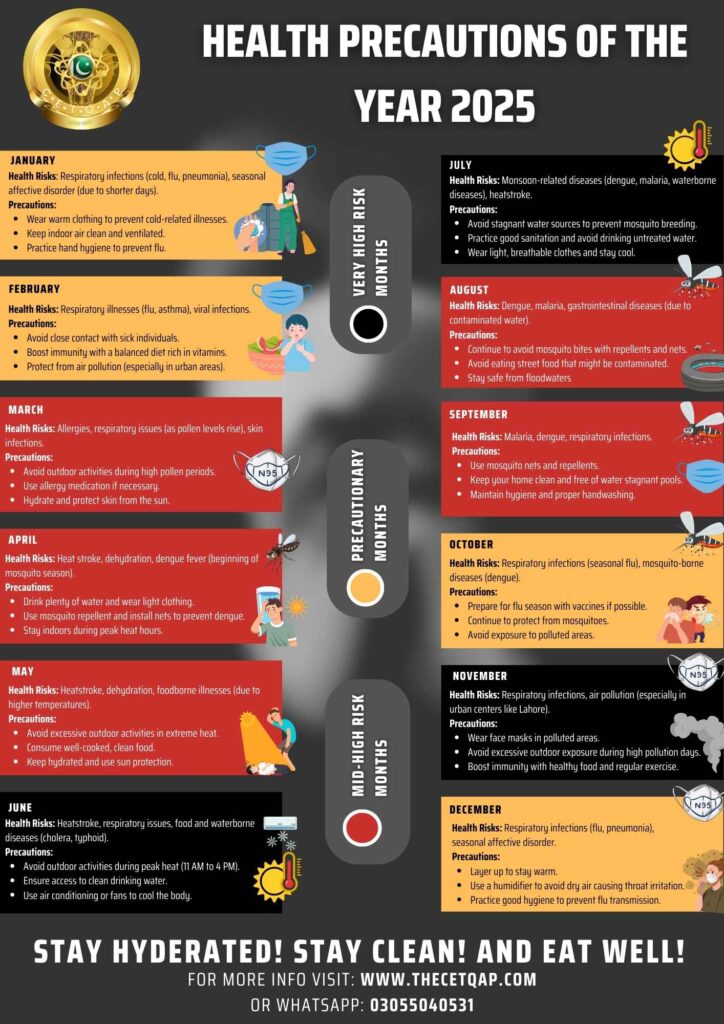
CETQAP recognizes the importance of empowering the public with the knowledge needed to take action against these health risks. As part of its campaign, CETQAP will be distributing informational flyers across local communities, schools, and public spaces, detailing the specific risks, precautions, and emergency steps to take in case of outbreaks.
The flyers will also include a monthly calendar of high-risk periods for each health issue, such as:
CETQAP is also planning community workshops to educate people about sanitation, mosquito control, and health screenings. Volunteers and public health workers will be on the ground distributing flyers, answering questions, and helping people understand how they can protect themselves and their families.
“We cannot wait for the problems to escalate,” says Dr. Ali Ahmed Khan, Director of CETQAP. “It is crucial that people understand the risks, take preventive measures, and stay vigilant, especially during high-risk periods. Our goal is to reduce the impact of these diseases and create a healthier future for all Pakistanis.”
How Can You Help?
CETQAP encourages every individual to take responsibility for their own health and the health of their community. The following steps can help minimize the spread of diseases:
CETQAP’s public awareness campaign aims to empower people with knowledge and tools to mitigate these health risks, ensuring that Pakistan is prepared for a healthier and safer 2025.
For more information on the campaign, please contact CETQAP’s Foundation Division or visit our website.
Nash Sommers is the dedicated Editor of News at CETQAP, where he plays a key role in delivering accurate and impactful updates about the latest advancements in Quantum Computing and AI at CETQAP, With a sharp eye for detail and a passion for technology-driven storytelling.
Nash Sommers – Editor News CETQAP